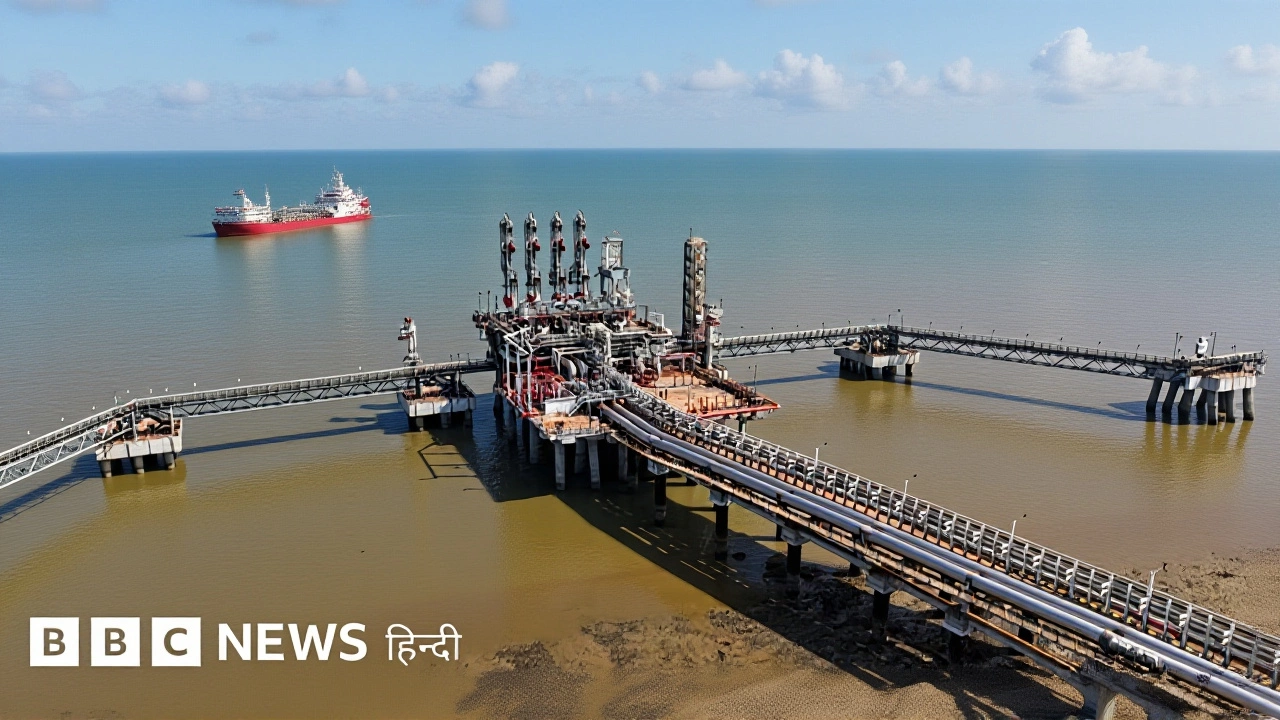
When Petroleum and Natural Gas Regulatory Board (PNGRB) announced its latest integrated tariff reforms on December 27, 2025, it delivered a rare win for everyday consumers. The move makes natural gas significantly more affordable for households and travelers across India, effective from January 2026. It’s a strategic shift that aims to balance consumer protection with market stability in the energy sector.
The announcement came just days after the regulator issued the new tariff structure on December 17, 2025. Here’s the thing: while corporate players often dominate energy news, this change hits home—literally. For millions of families using piped city gas networks (PNG), the cost of cooking and heating is set to drop or stabilize, offering relief amid rising inflation.
A Regulatory Body Takes Center Stage
To understand why this matters, you have to look at who PNGRB is. Established under the Petroleum and Natural Gas Regulatory Board Act, 2006, the body acts as a quasi-judicial authority. Think of it as the referee for India’s oil and gas pipeline markets. Its job? Protecting consumer interests, ensuring fair competition, and guaranteeing uninterrupted supply.
Under the leadership of Sanjeev Nandan Sahay, who was appointed Chairperson in June 2021, the board has been actively refining these mechanisms. The new headquarters, inaugurated at the World Trade Centre in New Delhi, signals a modernized approach to regulation. But today’s headline isn’t about real estate—it’s about your wallet.
The Numbers Behind the Relief
The details are still being digested by industry analysts, but the core message is clear: affordability. The integrated tariff revision focuses on the downstream distribution network. By adjusting the fees charged to distributors, the final price passed to residential users sees a reduction.
Why now? Context is key. On May 12, 2026, Petroleum Minister Hardeep Singh Puri highlighted a concerning trend: Oil Marketing Companies (OMCs) were facing quarterly losses reaching ₹1 lakh crore. With such massive financial pressure on state-run entities, one might expect prices to rise. Instead, the government is leveraging regulatory tweaks to keep end-user costs manageable.
India currently holds a rolling stock equivalent to 60 days of crude oil, 60 days of natural gas, and 45 days of LPG. These buffers provide the security needed to implement such consumer-friendly policies without compromising national energy security.
Broader Policy Shifts in 2026
This tariff reform doesn’t exist in a vacuum. It’s part of a larger regulatory overhaul. On March 24, 2026, the central government issued an order under the Essential Commodities Act, 1955. Titled the “Petroleum Products Distribution Order, 2026,” it regulates production, storage, and supply via pipelines. This legal framework ensures that while tariffs are adjusted, supply chains remain robust and competitive.
Interestingly, there’s no mention of any temporary waiver on “imbalance charges” in available records. Some rumors circulated online, but official sources from the Press Information Bureau (PIB) and PNGRB clarify that the focus remains strictly on integrated tariff restructuring. The distinction matters: imbalance charges relate to pipeline usage deviations, whereas tariffs affect direct consumption costs.
What Experts Are Saying
Industry watchers note that this move aligns with India’s broader goal of increasing natural gas’s share in the energy mix to 15% by 2030. Cheaper gas encourages adoption in households and transport sectors, reducing reliance on more polluting fuels like coal and diesel.
“It’s a delicate balancing act,” notes one energy analyst. “You have OMCs bleeding money due to global price volatility, yet the government insists on keeping domestic prices stable. The PNGRB reforms are the tool used to absorb some of that shock.”
What’s Next for Consumers?
For the average citizen, the changes kick in smoothly from January 2026. No application process is required; the new rates will be reflected in monthly bills automatically. Travelers using compressed natural gas (CNG) vehicles may also see marginal benefits, though the primary impact is on residential PNG connections.
The government plans to monitor the situation closely. An inter-ministerial press briefing scheduled for May 21, 2026, addressed recent developments in West Asia, hinting that geopolitical tensions could still influence future pricing. However, for now, the focus is on stabilizing the domestic front.
Frequently Asked Questions
Who is affected by the PNGRB tariff reforms?
The reforms primarily benefit residential households connected to piped natural gas (PNG) networks and travelers using CNG vehicles. Industrial consumers may see different adjustments based on separate commercial tariffs, but the headline savings are targeted at everyday citizens to reduce living costs.
When do the new natural gas prices take effect?
The new integrated tariff structure, announced on December 17, 2025, becomes effective from January 1, 2026. Consumers will see the revised rates reflected in their utility bills starting with the January billing cycle. No action is required from users to avail these benefits.
Did PNGRB waive imbalance charges?
No. Despite online rumors, official documents from PNGRB and the Press Information Bureau confirm there is no temporary waiver on imbalance charges. The current policy focus is solely on revising the integrated tariff structure for better consumer affordability, not on altering pipeline deviation penalties.
How does this help Oil Marketing Companies (OMCs)?
While OMCs are facing quarterly losses up to ₹1 lakh crore, the tariff reforms aim to stabilize demand. By keeping end-user prices competitive, the government hopes to maintain high consumption volumes. This volume-driven strategy helps offset margin pressures, even if per-unit profits are squeezed.
What is the role of Sanjeev Nandan Sahay in this decision?
As the Chairperson of PNGRB since June 2021, Sanjeev Nandan Sahay oversees the regulatory framework that enables these tariff revisions. His leadership has focused on strengthening the board’s quasi-judicial powers to ensure fair pricing and dispute resolution between suppliers and distributors.